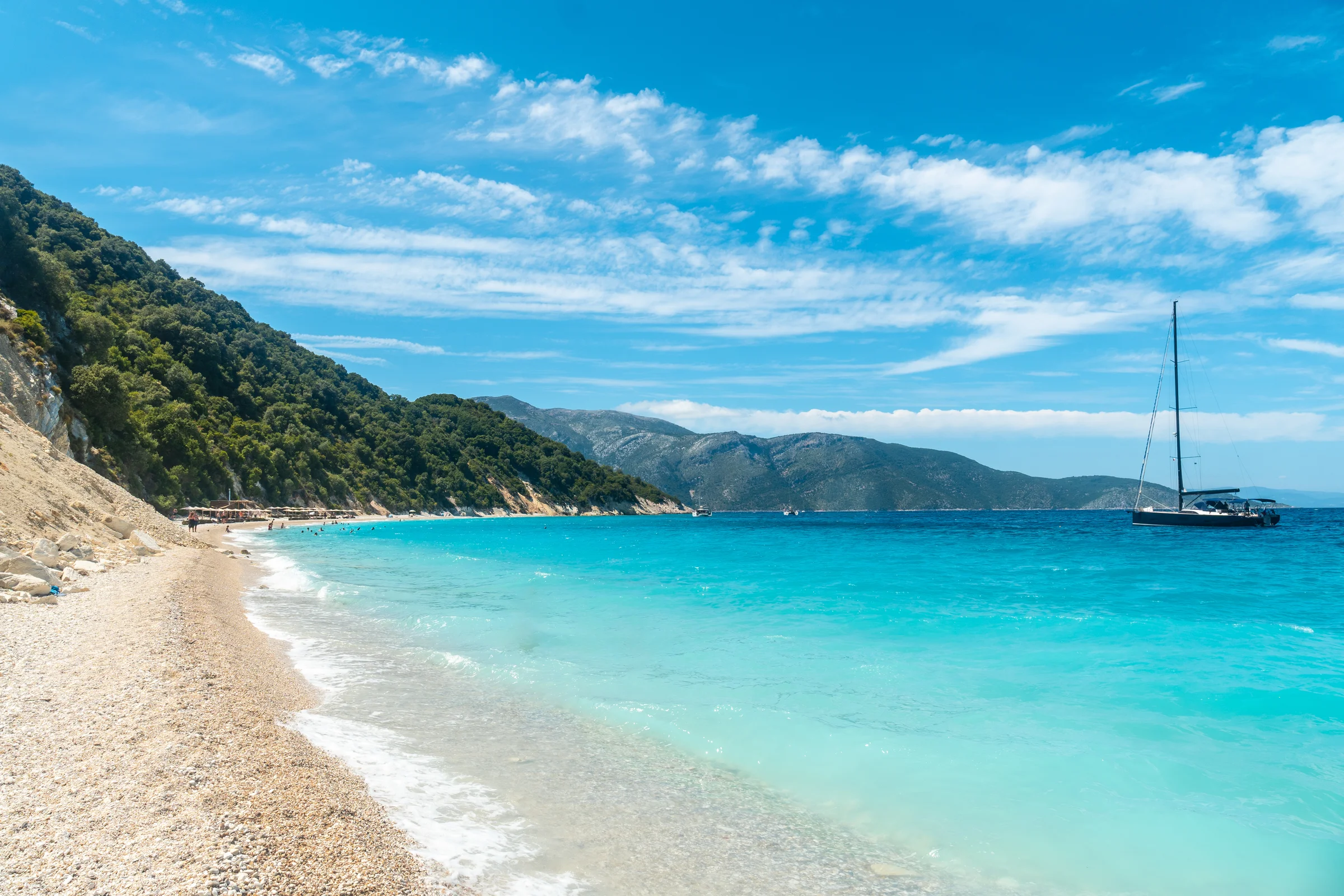
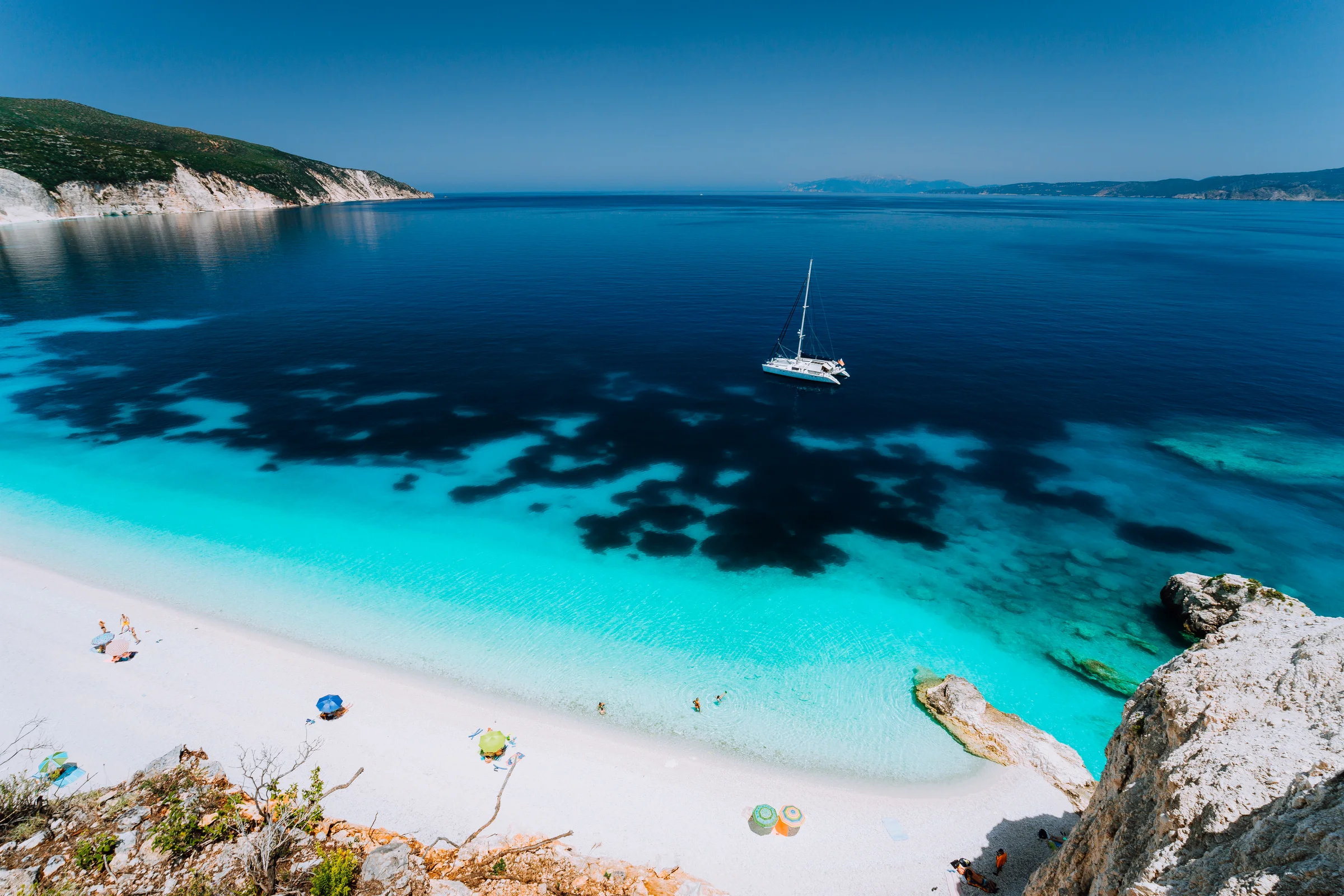
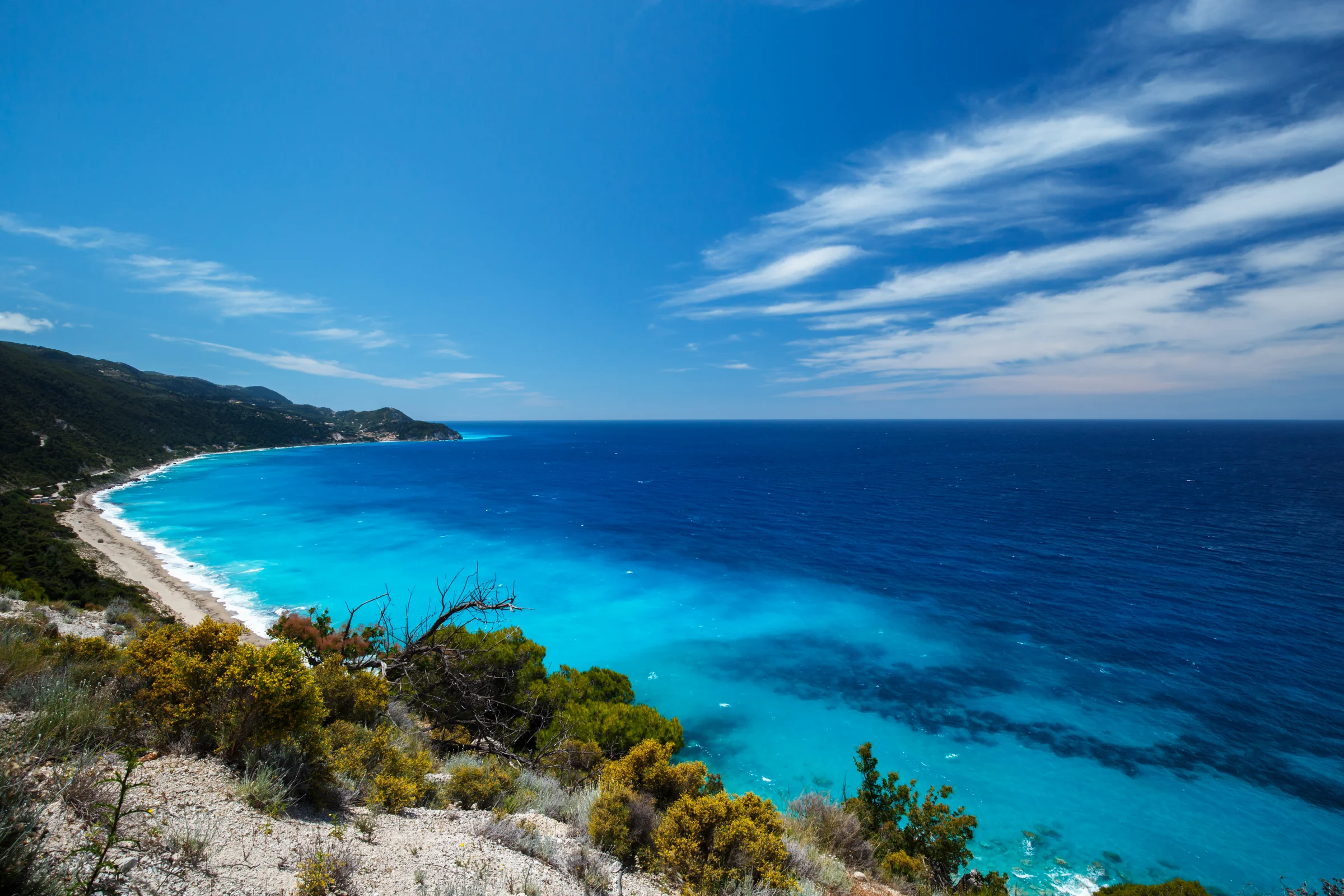
Nolan's film has put the Odyssey back in front of everyone in the summer of 2026. Three of the islands Homer names outright are within a week's sailing of Lefkada — and one of them is Odysseus's home.
Four names, straight out of the poem
When Odysseus finally tells the Phaeacians who he is, he does it by naming his neighbourhood: Ithaca, and around it Doulichion, Same and Zakynthos. Three of those four are on today's chart. Same is Kefalonia. Zakynthos never changed its name at all. Ithaca is Ithaca. Only Doulichion is still argued over.
All of them lie in the water we sail every week. From our pontoon in Lefkada harbour you can be at anchor off Ithaca the same afternoon.
Ithaca, the one people come for
It is smaller than visitors expect and quieter than its fame suggests. Vathy sits at the end of a long, almost enclosed inlet — you motor in past the headlands and the town appears all at once around the bend. Kioni and Frikes, on the north-east coast, are small quays where the whole village is the waterfront.
Two places on Ithaca are worth the walk. Polis Bay on the west side, where excavation turned up bronze tripods and a shrine that suggests Odysseus was being honoured here as a cult figure centuries before anyone wrote a guidebook. And the cave at Marmarospilia above Vathy, traditionally identified as the Cave of the Nymphs, where the Phaeacians are said to have left him ashore, asleep, with his treasure stacked beside him.
Neither is signposted the way a museum would be. That is rather the point.
Kefalonia, which Homer calls Same
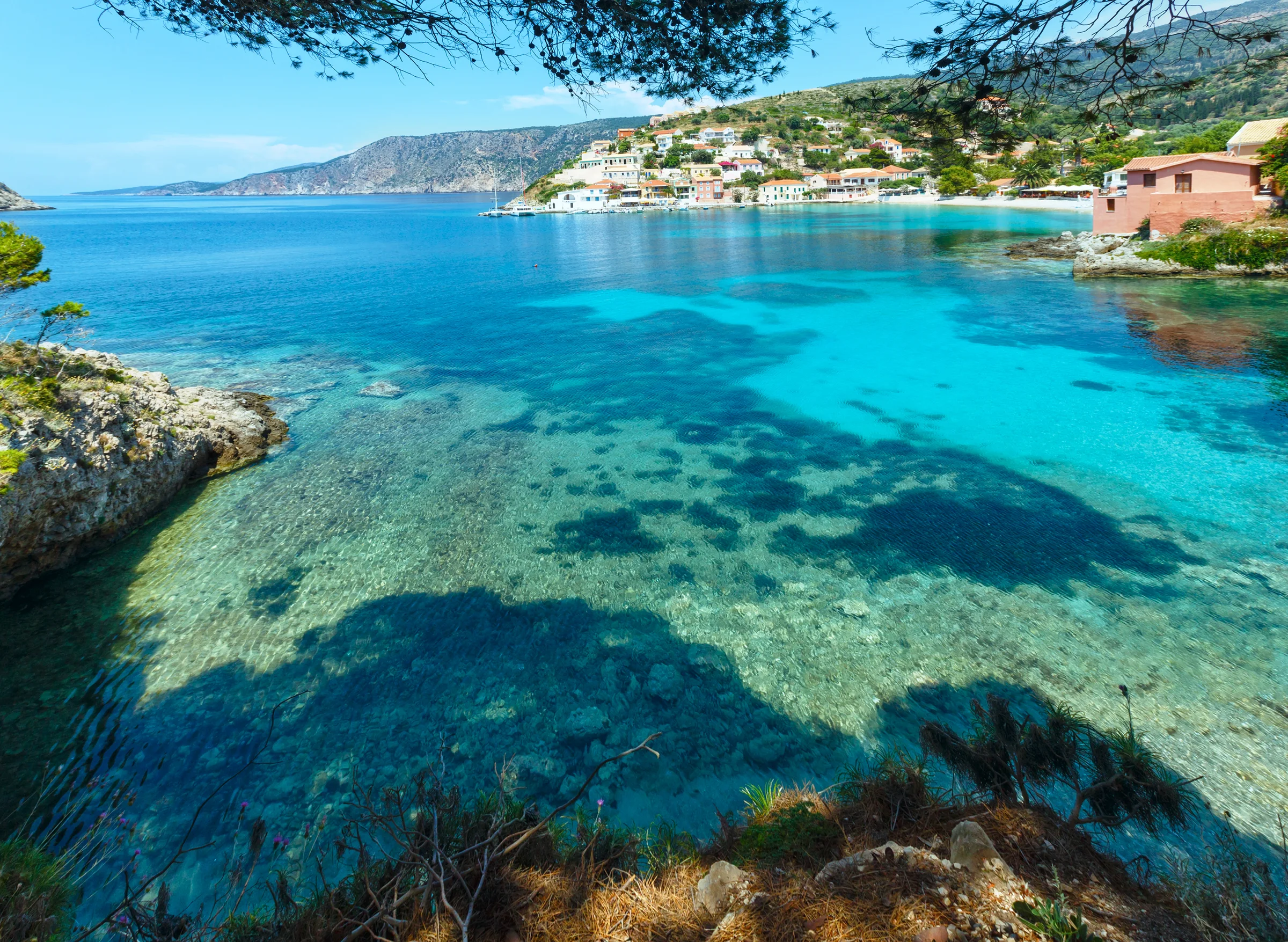
Fiskardo at the northern tip is one of the few Kefalonian villages the 1953 earthquake left standing, which is why its Venetian houses look nothing like the rest of the island. Sami, further down the east coast, keeps the older name. Assos sits on an isthmus under a ruined fortress and has perhaps six berths, so it rewards arriving early.
The argument nobody has settled
At the start of the last century the German archaeologist Wilhelm Dörpfeld dug at Nydri, on Lefkada, and concluded that Homeric Ithaca was not Ithaca at all — it was Lefkada. Most scholars did not follow him. But he was a serious archaeologist, he found real Bronze Age graves, and if you anchor in Vlycho Bay you are looking at the hillside he spent years on.
We mention it not to settle anything but because it is a good thing to know while you are sitting there.
A week that takes in all of it
- Lefkada to Meganisi — two hours, and a first night at Spartochori or Vathy
- Meganisi to Kioni, Ithaca — under three hours down the channel
- Kioni to Fiskardo, Kefalonia — a short hop across
- Fiskardo to Sami or the Ithaca west coast — half a day
- Back north to Lefkada in two easy legs
Nothing on that list is more than about four hours under sail. The rest of each day is swimming.
Why the film sends people here
A story that has been read for three thousand years came back into wide circulation in the summer of 2026, and a lot of people discovered that its geography is not mythical. Ithaca is a ferry ride from Kefalonia and an afternoon's sail from our base. You can stand in Polis Bay. The poem's islands are ordinary places where people fish and grow olives, which somehow makes them better, not worse.